Thursday, April 27, 2006

What Is The PERFORM Act?

Even though it's only a draft bill, the answer to that question depends on which side of the fence you sit on with respect to music licensing reformation :-)

Below are my favorite quotes fom copyright/technology attorney Bob Schwartz cross posted from Public Knowledge's Gigi Sohn.

  • "It is simply wrong for the government to freeze innovation by banning new technologies and features that are desired by consumers."
  • "The RIAA is already being well compensated by the satellite radio industry. XM and Sirius already pay the record labels tens of millions of dollars in performance royalties. In addition, under the Audio Home Recording Act of 1992 ("AHRA") satellite radio pays the record labels up to $8 for every digital radio recorder sold. RIAA's demand to be paid a third time reflects either greed or their simple desire to shut down a new technology."
  • "It bans the sort of private, noncommercial time-shifting that Americans have engaged in for decades."
  • "This bill is nothing more than the recording industry using Congress to gain leverage in private negotiations."
  • "The PERFORM ACT harms American consumers, the technology industry, and private, noncommercial recording rights."

Read the whole 8 pages HERE...

Tuesday, April 25, 2006

RealNetworks Granted Another Streaming Media Patent


RealNetworks announced yesterday that it has received a fundamental patent for streaming media technology and applications. The "Click-to-Stream"patent covers innovations going back to November 30, 1994, more than four months before Real introduced RealAudio. It also covers the core methods used when consumers select links to stream audio-visual media via webbrowsers and other media players.

Click-to-Stream joins a portfolio of over 35 patents related to the world of Internet media delivery. Real has more than 100 additional patent applications pending relating to digital media technology and services and continues to lead the paid content market - with more than 2.25 million paying subscribers for premium services as of the end of 2005.

"The "Click-to-Stream" patent covers the core methods used when an end user selects a digital media asset (audio and accompanying video or other metadata) to be played, causing digital packets of the selected digital media to be transmitted over an Internet Protocol network and received by the end user's playback device when playback begins prior to delivery of the entire digital media asset to the consumer's device. The patent applies whether the digital media is played back on a personal computer, mobilephone, or other hardware device. The patented "Click-to-Stream" method is most commonly initiated when an end user accesses media links from web browser pages, embedded multimedia advertising, and links managed by network- enabled software media players."Rob Glaser, chairman and CEO of RealNetworks stated "This fundamental new patent recognizes our breakthrough innovation, and provides Real with an exciting opportunity to expand the Helix Community's role as the centerpiece of the digital media marketplace."

Senate Judiciary Committee Hearing on Digital Radio

Mark Lam, Chairman and CEO of Live365, will testify tomorrow at a U.S. Senate Judiciary Committee hearing on digital radio entitled "Parity,Platforms and Protection: The Future of the Music Industry in the Digital Radio Revolution ". According to DiMA's website, Lam will discuss the challenges facing Internet radio and will urge the Committee to help create a level competitive playing field for broadcast, cable, satellite and Internet radio by:

- Legislating royalty and programming parity among all digital radio services

- Protecting recording artists and copyright owners from radio services that promote and profit from consumer recording of their programming

- Resolving the longstanding dispute over the meaning of "interactive service" so that consumers, online radio services and recording artists can maximize the benefits of blending Internet technology and radio programming.

It seems that Lam and others are hoping to amend the Copyright Act so that it no longer favors broadcast, cable and satellite radio...Perhaps it's time terrestrial broadcast radio pays their way like everyone else? Maybe then we'd get a quicker resolution :-)

Internet Sound Recording Royalties


Here are a few links to some illuminating documents from the Digital Media Association's website (DiMA). Taking the time to read these cleared up a lot of questions I've been having recently regarding the current rate structure for Sound Recording Royalties and how artists are getting paid for the online broadcasts and performances of their music...

Monday, April 17, 2006

CD Baby Partners with Worldwide One-Stop SUPER D

This exciting announcement was released last Friday but is still under the radar (thanks Coolfer!) Continuing the tradition of enabling and emancipating indie artists, Derek and crew are raising the bar for independent music distribution by making their entire CD catalogue available to retailers on a global scale. According to the press release, the exclusive distribution agreement includes CD Baby's 160,000 titles, comprised of 128,000 artists, which will now be available to augment Super D's current in stock selection of 216,000 titles - representing product from 24 countries. The major benefit of using a one-stop is simplified purchasing via a single source. I'm personally glad to see that another antiquated and time-honored barrier to entry (ACCESS) has been removed for the independent sector - which will hopefully lead to improved consumer selection, increased physical sales and revived distribution of quality music...

Friday, April 14, 2006

Hollywood Is Getting It!

I was pleasantly surprised to read today in a Strategy Analytics email that the produers of the recent King Kong remake decided to release the movie simultaneoulsy on DVD and for Download - even if only in the UK. "Although independent and back-catalogue movies have been available via download before, Kong marks the first time that a Hollywood studio (Universal Pictures International) has allowed a major hit title to be released simultaneously on both DVD and through the online channel." Very smart and only a small glimpse of things to come...I think that the content cannibilization argument will be seriously tested in the coming months and the eventual results will show that more sales actually result in this type of dual-distribution-approach...

Thursday, April 13, 2006

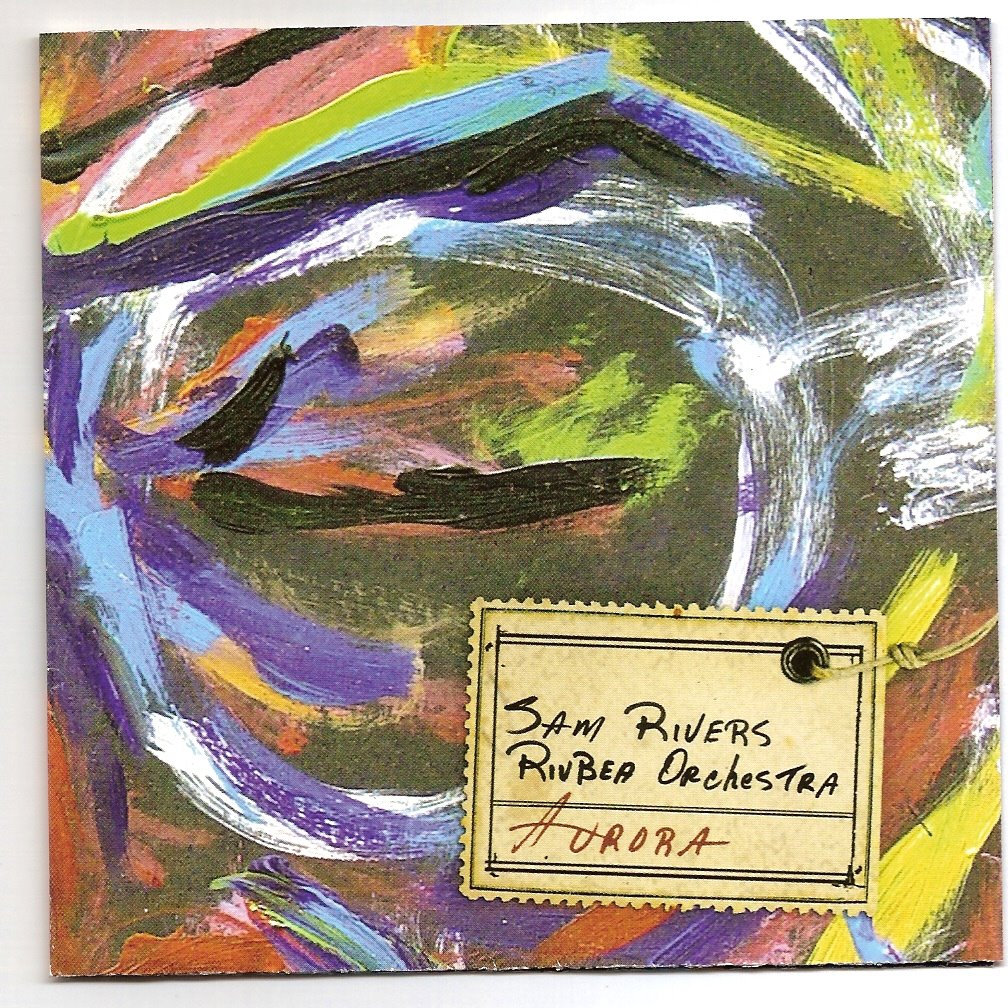
RivBea Orchestra Relases New CD - AURORA

A few years ago in the mid nineties, I had the esteemed honor and pleasure to be a regular member of the Rivbea Jazz Orchestra, directed by Sam Rivers. This ensemble is a unique 17 piece band that plays avant garde jazz written exclusively by by the legendary saxophonist and composer Sam Rivers. The music from his latest Aurora CD (which I happen to play trumpet on) was recorded and mixed at FullSail's Studio B and was officially released last week. The CD is not for everyone, but is truly world class in its infectious grooves and daring improvisations. Since Sam's last CD was nominated for a Grammy - I've got my fingers crossed :-)
(I will post later to tell you where it's commercially available, since it's officially an "indie" release and has no major distribution...Hopefully, Rhapsody, CD Baby, mp3.com iTunes and Amazon will add it. )

Wednesday, April 05, 2006

Music Business & Technology Lecture

Today I gave a presentation to Rollins College Music Business students and set a new talking record within my allotted 70 minutes. It was refreshing to see the student body so familiar with the confluence of digital media on the web. We covered a lot of ground, so I'm posting this Powerpoint for the students to review. (It is 8 MB's......Enjoy !)

Friday, March 31, 2006

Interesting Podcast Stats from eMarketer...

"Clearly more than a passing fad, podcasting experienced nearly fivefold audience growth last year. Fuelled by the addition of video and consumer enthusiasm for any medium that facilitates consumption "anywhere, anytime," this rapid growth is certain to continue, though not at the exaggerated rate claimed by many enthusiasts." For $695, they'll even Fed-Ex you a copy of the report...

  • eMarketer states that the US market for podcast audiences is projected to grow to somewhere between 20 million and 80 million by 2010, depending on the source.
  • Today's podcast audience is roughly 10 million, with expectations that it will more than double to 25 million by 2008 and double again to 50 million by 2010 (again, depending on the source, the projected numbers vary).
  • Over 3 million people download an average of one or more podcasts per week; that number is expected to grow to 7.5 million in 2008 and 15 million by 2010.
  • Podcast advertising is growing exponentially as well, with spending in this category to reach $300 million by 2010.

Lime Wire To Launch Content Filtering System

Lime Wire is launching an experimental Beta Filtering System. According to the website, "Filtering enhances our network as a safe place to share content and information while respecting the concerns of copyright owners. Based on filtering requests from artists and copyright owners, the Filtering System prevents users from downloading, uploading and querying selected files on LimeWire."

In the Filtering System, copyright owners identify files that they don't want shared and submit them for inclusion in a public list. LimeWire then consults this list and stops users from downloading the identified files "filtering" them from the sharing process.

Lime Wire's Filtering System is in experimental mode and they kindly ask for your patience as they continue to improve their filtering infrastructure. In light of logistical restrictions, Lime Wire cannot guarantee the outcome of a filtering request, but they pledge to make a best effort attempt to meet copyright owner filtering requests. Limewire states that "they are working to make the Filtering System as effective and error-proof as possible..."

Monday, March 27, 2006

More Users Opt for Free VoIP

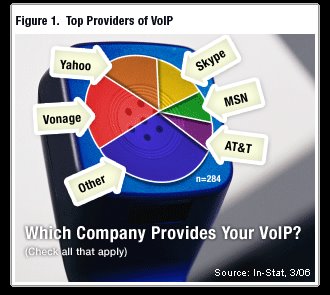
In-Stat recently released news that it finds that among VoIP providers, those offering FREE PC-based applications are currently more popular than those offering broadband IP telephony service. I'm not surprised...In-Stat's survey results, show that Vonage, a for-fee broadband IP telephony provider, had the greatest number of users, however, the other top four providers offered free PC-based VoIP applications.


  • Vonage accounts for nearly one-third of respondents using a broadband IP telephony solution and is the definitive market leader.
  • Yahoo, Skype, and MSN were respectively the top three providers of PC-based VoIP applications. Among PC-based VoIP providers, Yahoo and Skype are the market leaders based on the In-Stat survey, both with over 20 percent of respondents. MSN is the only other provider accounting for more than 10 percent of respondents.
  • AT&T and Verizon both accounted for roughly 15 percent of respondents and other broadband IP telephony providers accounted for less than 10 percent.
  • Most providers account for less than 10 percent of respondents, demonstrating the fragmentation of the market in which no one solution yet dominates.

Friday, March 24, 2006

Will The New Sirius s50 Royalty Ever Really Reach Artists?


Sirius Satellite Radio recently reached an agreement with three major labels (Warner Music, Universal Music, and Sony BMG) related to its new S50 portable player, which allows users to digitally copy/record individual songs from the various channels. [However, it's important to mention that the music files aren't portable...]
Anyway, as part of the reported resolution, Sirius has agreed to pay an undisclosed "fee per unit" royalty to Warner and Universal for every S50 sold. Understandably a necessary move on Sirius' part, but I'm confused - how does this benefit the artists? How can you split that royalty up to the hundreds or thousands of songwriters involved? Who will have access to this new pool of money? To be more equitable, shouldn't there be a royalty paid per copy? I mean come on now, make those computers count the bits! We're a little more advanced now than we were with DAT machines...
Anyone else think this is a joke too?

Thursday, March 23, 2006

2006 M&A Insights - U.S. Ent. and Media Industry


If you haven't already read the results of PwC's 9th Annual Global CEO Survey featuring the perspectives of 1,410 CEOs in 45 countries, I recommend that you take the time to read it. The survey takes a close look at globalisation and complexity, two inevitable forces in today's changing economy. To download the survey in PDF format click here.

Tuesday, March 21, 2006

French Lower House Passes P2P Legalization Bill

French lawmakers approved an online copyright bill today that would require Apple to break open the exclusive format behind its market-leading iTunes music store and iPod players. The draft law, which also introduces new penalties for music pirates, would force Apple, Sony and others to share proprietary copy-protection technologies so that rivals can offer compatible services and players. (But what's so wrong with this type of competitive market?)

Lawmakers in the National Assembly (France's lower house) overwhelmingly approved the bill 296-193. The legislation now has to be debated and voted by the Senate - a process expected to begin in May. Not surprisingly, Apple has so far refused to comment on the bill or on analysts' suggestions that it might choose to withdraw from the French online music market rather than share the proprietary technology at the heart of its business model.

According to the article, French Apple reps did not return any calls today and I'm not surprised...Under the bill, companies would be required to reveal the secrets of proprietary copy-protection technologies such as Apple's FairPlay and Sony's ATRAC3... (So much for
letting the market adjust itself
...)

Monday, March 20, 2006

Results of NPD Study for NARM

A new study conducted for the National Association of Recording Merchandisers (NARM) by The NPD Group reveals that there are stil opportunities in the near-term to increase physical CD sales among an active group of consumers.

According to Russ Crupnick, vice president and senior industry analyst for The NPD Group, "among teens, sales of CDs are up five percent in 2005, illustrating a halo effect from digital music, interaction with video games and other venues for new music discovery."

Even with gains among teens, the data indicates that the music industry is losing older consumers at an alarming rate. "Older adults have the interest and the disposable income, so the industry can't afford to take them for granted," Crupnick said. "To spur greater sales among this audience, it's important to make them aware of available music that might interest them, so they shop for music more often."

Although consumers are buying and sharing digital music at increasing rates, the report shows they rate physical music product as a good entertainment value. Heavy buyers spent nearly $250 on average last year on CDs. These core music consumers, who represent 41 percent of music revenue from CD purchases, remain passionate about collecting physical music from their favorite artists, whether on CD, or on CD/DVD and DualDisc formats that also offer video content.

A majority (54 percent) said they felt music was an excellent or very good value, which compares favorably to their views of the value of DVDs (58 percent). A growing number of music buyers of all ages now patronize mass merchants and stores where they can also buy DVDs, consumer goods, health and beauty aids, and other products. This trend represents another challenge for traditional music retailers, since it increases competition for shoppers' attention and wallet share.